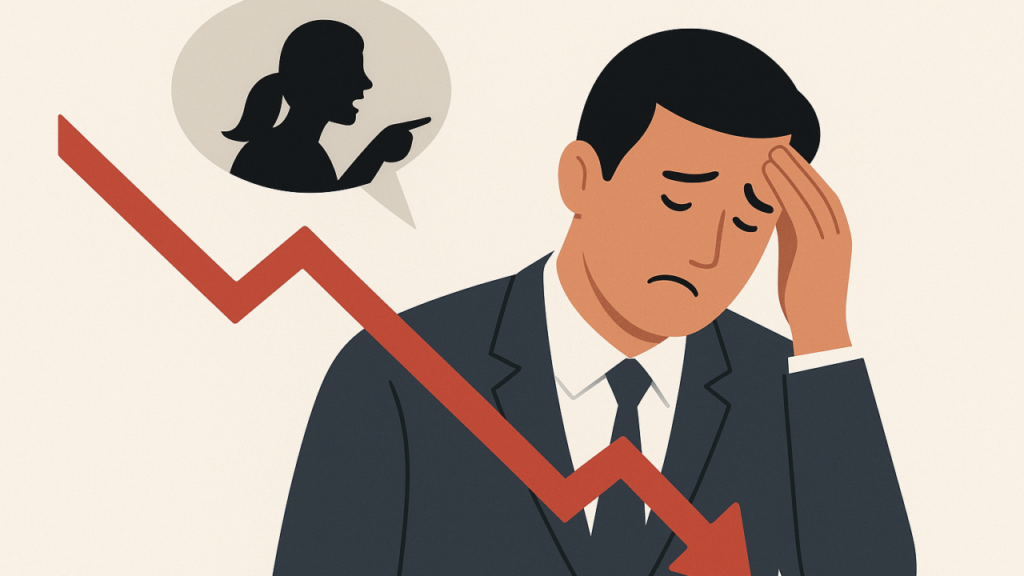
In recent days, there was a case in the national headlines in which a Bengaluru tech employee working in an IT firm died by suicide because he was going through a divorce case with his wife. In a death note, he accused his wife and in-laws of harassment and allegedly framing him in false cases. This is not a single case where a husband commits suicide due to marital disputes, as per the 2022 data of the “National Crime Records Bureau”, over 1,25,000 cases are filed under section 498A for dowry harassment out of which nearly 75% of cases result in acquittals and suggesting misuse, only about 20% of cases result in convictions. We can examine the devastating effect of this situation by examining the suicidal rates among married couples, as per the NCRB data of 2021, over 33,000 men died by suicide vs. 22,000 women.
This situation emerged due to the rising number of false dowry and domestic violence cases to extort money or gain leverage in divorce. It may be referred to as “Legal terrorism,” Where the husband is forced to pay alimony/settlement even if the allegations are unproven, because there is no provision regarding punishment for false accusers in Indian law, leading to widespread misuse.
Indian laws contain legal bias against men; provisions like Section 498A of the IPC, the Domestic Violence Act, and the Maintenance Act are often misused against the husband, with the presumption of guilt until proven innocent in dowry and domestic violence cases. On a complaint by the wife and in-laws, police automatically arrest the husband without a proper investigation under Section 498A of the IPC.
These cases cause Mental, financial, and social exploitation of man. In these types of cases, men are forced to pay alimony even if the wife is financially independent, and due to bias in divorce settlement cases, men have to pay an unequal share in property and assets to their wives. And if the case is false, legal costs drain a man financially and mentally.
In these types of cases, society often tags men as “abusers” without any valid evidence, and the media also portrays men as villains in marital disputes without any coverage of men suffering in these cases. Due to these situations, it was seen that there was an increase in depression, anxiety, and suicide among men. As per the AIIMS study of 2020, 70% of men facing divorce cases suffer from depression and anxiety. The reason for this anxiety and depression is not just emotional distress, although these cases bring upon these men, but also the fact that they are accused of multiple criminal offences relating to dowry or domestic violence. This results in them losing their jobs because of these accusations, and the chances of them being reinstated or finding a new job is almost impossible because of the stigma associated with being merely accused in such cases.
However, when the accused is a woman, the scenario is different. In the case of Atul Subhash, his wife, who drove him to suicide, has not only been released on bail but has also resumed her job, which is a prime example of social bias and legal flaws. And If we take an example of the male side in one of the cases, a software engineer was arrested under 498A after his wife filed a divorce case. Before getting bail, he spent 3 months in jail. Later, the court found no proof against the husband and granted an acquittal, but due to this case, he lost his job and reputation, which caused him mental and societal exploitation
These situations all arise due to the lack of Gender-neutral laws in India, where there is no protection for men under domestic violence Laws, and there are no such laws as Section 498A for husbands facing abuse. Many times, the Men’s Rights group demands reforms under these laws, but until now, they have received little attention. To tackle these situations, we need gender neutral laws and laws that provide punishment for false cases to deter the misuse of these gender bias laws.
– By Shubham Raj